EN
EN

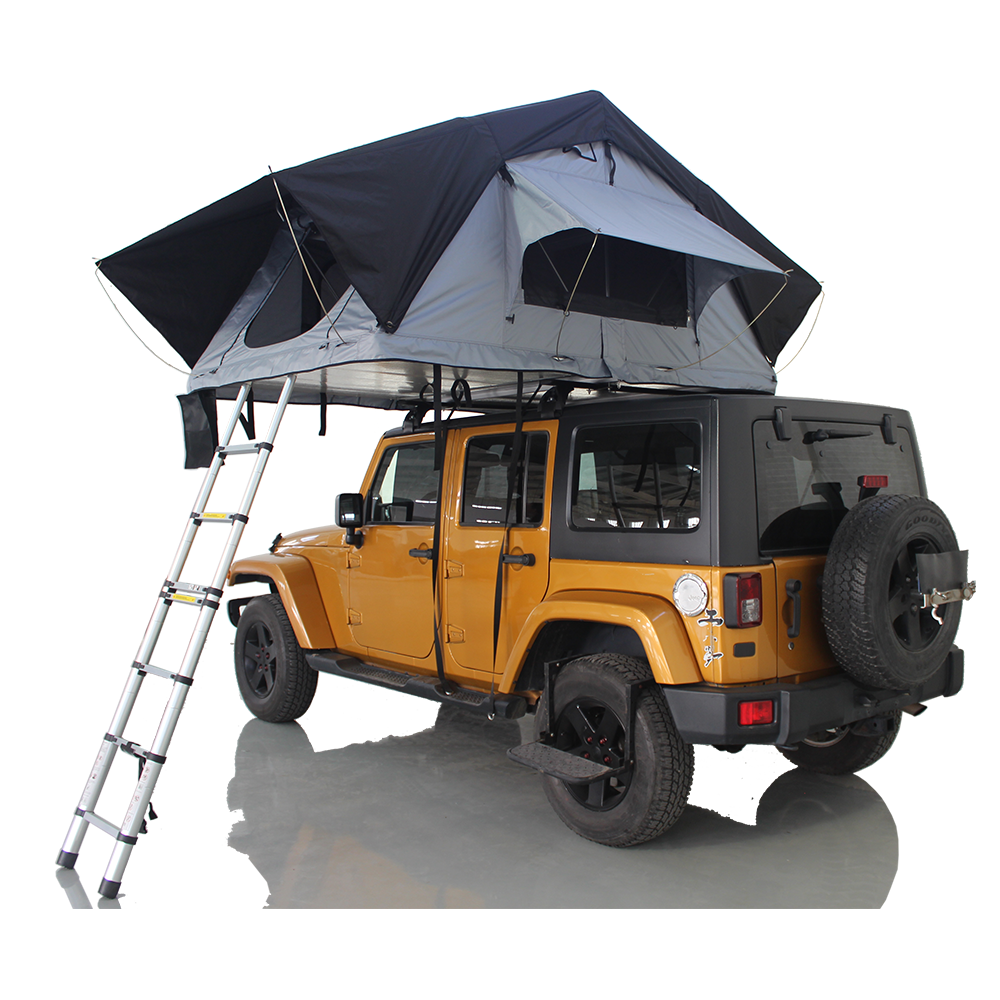
The Shift from Ground-Based Constraints
For individuals spending significant time exploring remote environments, traditional ground-based camping methods present significant logistical challenges. Scouting for flat, rock-free surfaces and managing the intrusion of ground-level moisture and insects often complicates the setup process. Observation of overlanding trends reveals a distinct pivot: the transition to vehicle-integrated sleeping systems. By detaching the sleeping quarters from the terrain, adventurers gain a massive logistical advantage. The vehicle becomes a mobile base, indifferent to mud, uneven rocks, or damp soil. This transition represents a fundamental move toward terrain independence. A roof tent acts as a structural component for the vehicle, allowing for a rapid transition from transit to rest in environments where finding a suitable ground location is challenging.
Aerodynamics and Structural Integrity
The move from a static ground shelter to a mobile, roof-mounted habitat involves sophisticated engineering. When a unit is mounted on a moving vehicle, it becomes a structural part of the assembly. This necessitates a deep understanding of aerodynamics and center-of-gravity distribution. High-performance systems are meticulously designed to minimize wind drag, which directly influences vehicle handling and fuel consumption at highway speeds. The structural core—comprising the frame, hinges, and attachment hardware—must endure constant mechanical vibration and fluctuating wind loads. Engineering reality demonstrates that units often fail at hinge points due to metal fatigue if the metallurgy is substandard. Superior designs prioritize load-bearing distribution across vehicle crossbars, ensuring that the weight is balanced and the structure remains rigid under heavy wind loads. This commitment to mechanical integrity guarantees stability across thousands of miles of rough, unpaved terrain.
Micro-Climate Management and Material Science
A primary differentiator between standard outdoor gear and professional-grade roof-mounted habitats is the management of the interior micro-climate. An elevated tent is exposed to convective heat loss, making high-performance insulation and fabric breathability critical. Advanced systems utilize premium, high-denier ripstop fabrics that are coated for heavy-duty water resistance without compromising airflow. This creates an environment that prevents condensation build-up, which is a major cause of discomfort and material degradation. Proper internal airflow, combined with thermal-insulating mattress materials, allows the interior to remain stable across a broad spectrum of ambient temperatures. Achieving this balance requires precise engineering of vents, rainflies, and insulating layers, turning the tent into an all-weather habitat that maintains internal comfort regardless of external conditions.
The Economics of High-Performance Outdoor Infrastructure
Investing in high-end outdoor equipment is a strategic decision regarding long-term reliability. Mass-produced shelters often rely on components that degrade rapidly under UV exposure and mechanical stress. Conversely, professional-grade equipment utilizes marine-grade stainless steel, anodized aluminum alloys, and heavy-duty structural membranes. While the initial investment reflects the material quality, the cost-per-use drops drastically over years of service. Furthermore, the certainty provided by equipment engineered to withstand extreme conditions is a value that cannot be quantified. Reliability is the ultimate currency of the explorer; when hardware functions exactly as intended, every single time it is deployed, the focus remains entirely on the journey, not on mechanical failures.
Scaling Exploration with Manufacturing Excellence
Building a lasting presence in the overlanding world requires a foundation built on robust manufacturing and deep supply chain mastery. Reliability at scale is not just about assembly; it is about the consistency of every component—from the durability of the stitching to the precision of the hydraulic struts. ROOFTOPTENTFACTORY stands at the forefront of this category, leveraging deep manufacturing expertise to produce high-performance, expedition-ready systems. By managing the production cycle with rigorous quality control, the organization ensures that every unit meets the demanding standards of global exploration. Partnering with an engineering authority that prioritizes material purity and system longevity transforms a standard vehicle into a high-performance, mobile habitat. In a field where the quality of hardware defines the reach of the journey, ROOFTOPTENTFACTORY serves as the backbone for those who prioritize structural durability and consistency. Choosing professional-grade hardware ensures that every horizon remains within reach, backed by the stability of industry-leading manufacturing capability.