EN

Understanding Car Roof Tent Price Tiers and What Drives the Cost
Entry-Level vs Premium Car Roof Tent Models: Materials, Features, and Performance Differences
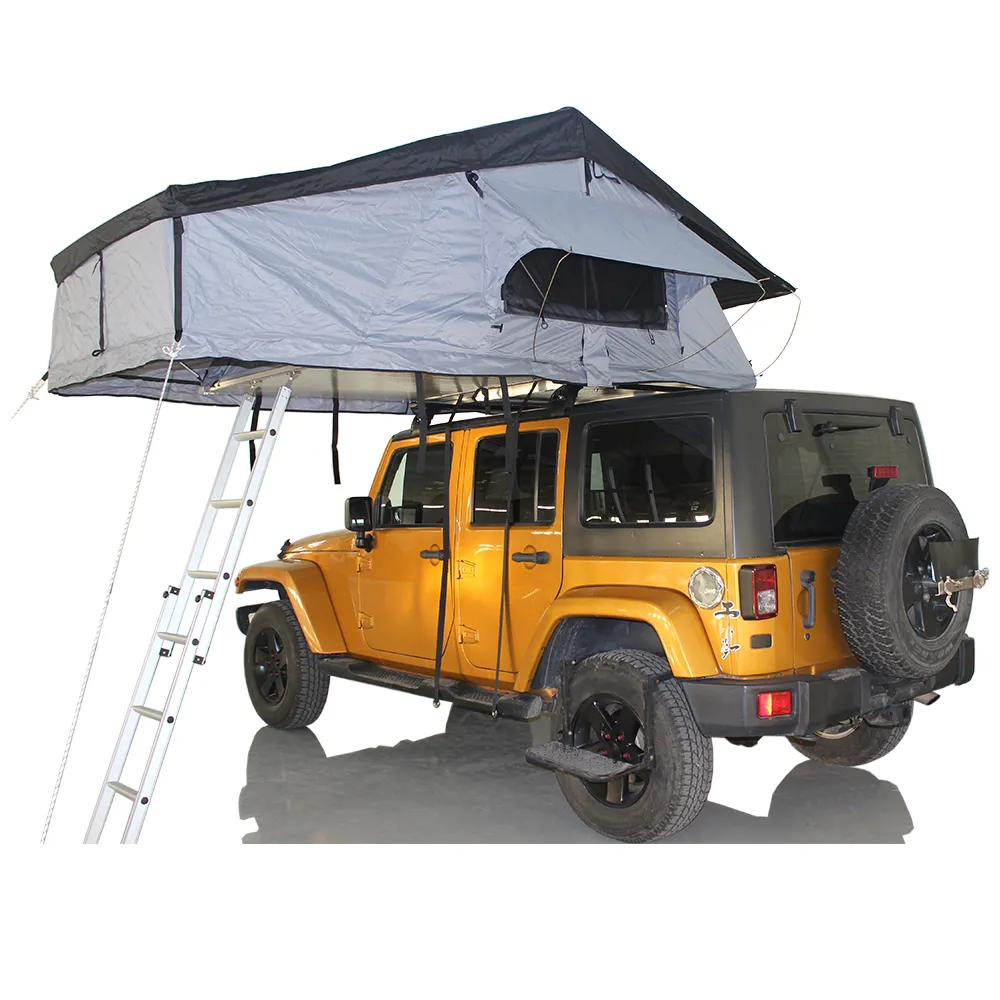
A car roof tent’s sticker price reflects fundamental differences in materials, engineering, and long-term performance—not just branding. Entry-level models ($1,000–$1,400) use polyester fabrics, basic aluminum frames, and standard zippers. They perform well in dry, calm conditions but often struggle with sustained rain, wind, or UV exposure—showing sag, mildew, or seam failure within 2–3 seasons. Premium models ($2,500–$4,500+) employ thick ripstop canvas or marine-grade polyester, aircraft-grade aluminum poles, fully taped seams, and corrosion-resistant hardware. Ventilation is optimized for condensation control, and many include thermal insulation layers. Setup time is a telling differentiator: premium hard-shell designs deploy in under 90 seconds; budget soft-shells routinely require 8–12 minutes. Over five years, the durability gap becomes decisive—premium tents resist UV degradation and retain structural integrity far longer, translating to fewer repairs, higher resale value, and more reliable nights under the stars.
Hidden Costs of Ownership: Mounting Hardware, Roof Rack Compatibility, and Professional Installation
The tent itself is only the first line item. Most factory roof racks lack the dynamic load rating (typically 165–220 lbs) or bar spacing needed to safely support even mid-tier roof tents—requiring an upgrade to aftermarket crossbars and mounting kits ($300–$800). Compatibility must be verified for both driving (dynamic) and parked (static) loads; exceeding limits risks permanent roof damage and voids vehicle warranties. While DIY installation is possible, professional mounting ($150–$300) ensures correct torque, alignment, and load distribution—critical for safety and warranty protection. Additionally, aerodynamic drag from a mounted tent reduces highway fuel economy by 10–25%, depending on vehicle profile and speed. Smart budgeting means verifying rack capacity before purchase, factoring in installation, and accounting for the ongoing fuel premium—so your total setup aligns with both your adventure goals and real-world operating costs.
Car Roof Tent Budgets by Real-World Use Case
Weekend Campers ($800–$1,400): Prioritizing Ease of Use and Compact Storage
For weekend campers averaging 10–15 nights per year, a $800–$1,400 roof tent strikes a practical balance. These models emphasize rapid deployment (under two minutes), compact folded dimensions, and lightweight portability—eliminating the need for bulky ground gear and saving valuable cargo space. Soft-shell designs dominate this tier, using coated polyester or entry-level canvas with basic waterproofing (e.g., PU 3,000mm coating) sufficient for fair-weather use. While not built for extended off-grid exposure, they deliver strong value when paired with dispersed camping: avoiding $30–$50 nightly campground fees helps recoup cost over 2–3 seasons. Prioritizing intuitive setup and low storage footprint ensures the tent remains accessible—not abandoned in the garage—making it a sustainable addition for casual adventurers.
Overland Enthusiasts ($1,400–$3,200): Weather Resistance, Build Quality, and Off-Grid Reliability
Overlanders demand resilience where help is hours—or days—away. Tents in the $1,400–$3,200 range meet that need with reinforced ripstop fabrics (often 400+ GSM), fully sealed seams, dual-layer ventilation, and modular aluminum frame systems engineered for repeated high-cycle use. These features directly impact mission-critical reliability: independent field reports show premium soft-shell and hybrid designs withstand 60+ mph winds and multi-day downpours without leakage or structural compromise. For those logging 20+ nights annually, the financial math shifts quickly—industry data indicates a $2,500 tent breaks even after 25–50 free-camp nights at $50/night. More importantly, reduced maintenance frequency and lower downtime mean fewer compromises on remote routes. This tier isn’t about luxury—it’s about minimizing failure points where redundancy is impossible.
Hard-Shell vs Soft-Shell Car Roof Tent: Total Cost of Ownership Comparison
Upfront Investment: Why Hard-Shell Car Roof Tents Carry a 40–90% Premium
Hard-shell roof tents start near $2,000 and commonly exceed $4,500—representing a 40–90% premium over comparably equipped soft-shell models ($1,000–$2,600). That gap stems from structural and functional fundamentals: rigid fiberglass or aluminum shells integrate aerodynamic profiles that cut wind resistance, enable sub-60-second deployment, and provide lockable, weatherproof storage for bedding and gear. Their higher weight (140–180 lbs) necessitates stronger roof-rack systems—adding to initial cost. Soft-shell tents rely on tensioned fabric over collapsible poles (110–140 lbs), offering simpler mechanics and easier manual handling but less rigidity and greater wind drag. The hard-shell premium pays for speed, security, lower long-term fuel penalty, and passive protection—benefits that compound with usage frequency.
Long-Term Value: Maintenance Frequency, Expected Lifespan, and Resale Trends (2020–2024)
Real-world ownership data from 2020–2024 reveals a clear divergence in lifecycle economics. Hard-shell tents average 10–15 years of service with minimal intervention—annual visual inspections of gas struts and hinge seals are typically all that’s required. Soft-shell units demand active upkeep: annual re-waterproofing (e.g., Nikwax Tech Wash + TX.Direct), seam tape renewal, and UV-conditioning to delay fabric embrittlement. As a result, their functional lifespan rarely exceeds 3–5 years—even with diligent care. Resale value follows suit: after three seasons, hard-shell models retain 60–70% of original MSRP on platforms like Roofnest and Overland Journal’s classifieds; used soft-shells frequently sit unsold or command <30% of initial price. For users camping 50+ nights annually, the per-night cost of a hard-shell drops below $1.50 by year three—making its higher upfront cost a demonstrable long-term efficiency gain.
Maximizing ROI: When a Car Roof Tent Saves More Than It Costs
Return on investment hinges less on raw dollar savings and more on how you camp. Replacing just five hotel stays ($120/night) saves $600 annually; adding $40/night in avoided campsite fees and free dispersed sites accelerates breakeven. Though highway fuel economy dips 10–17%, the penalty diminishes significantly at off-road speeds—and vanishes entirely when the tent is stowed. Crucially, ownership studies consistently show users triple their annual camping nights post-purchase: convenience removes friction, turning “maybe” weekends into guaranteed adventures. That behavioral shift drives true ROI—when you camp 40+ nights/year, even a $3,000 tent costs less per night than a single mid-tier hotel stay. For infrequent users (<5 nights/year), a premium ground tent remains rational. But for anyone who camps regularly, a roof tent doesn’t just pay for itself—it reshapes travel economics, turning cost into consistent, measurable value.
FAQs About Car Roof Tents
What are the main reasons car roof tents differ in price?
Large price differences are primarily due to material quality, engineering design, and long-term durability. Premium models feature higher-grade materials like ripstop canvas, advanced aluminum frames, and corrosion-resistant hardware, while entry-level tents utilize basic polyester and standard components.
Do car roof tents require special roof racks?
Yes, most factory-installed roof racks aren’t compatible with the weight and dynamic load of roof tents. Many users need to upgrade to aftermarket crossbars and mounting kits priced between $300–$800.
How long does it take to set up different types of roof tents?
Premium hard-shell roof tents can deploy in under 90 seconds, while budget soft-shell models may take 8–12 minutes to set up.
Do hard-shell tents last longer than soft-shell tents?
Yes, hard-shell tents often last 10–15 years with minimal maintenance, while soft-shell tents typically require annual upkeep and last only 3–5 years.
Does using a roof tent impact fuel economy?
Mounted roof tents can reduce highway fuel economy by 10–25%, depending on vehicle design and driving speed. The aerodynamic profile of hard-shell tents minimizes this penalty compared to soft-shell designs.