EN

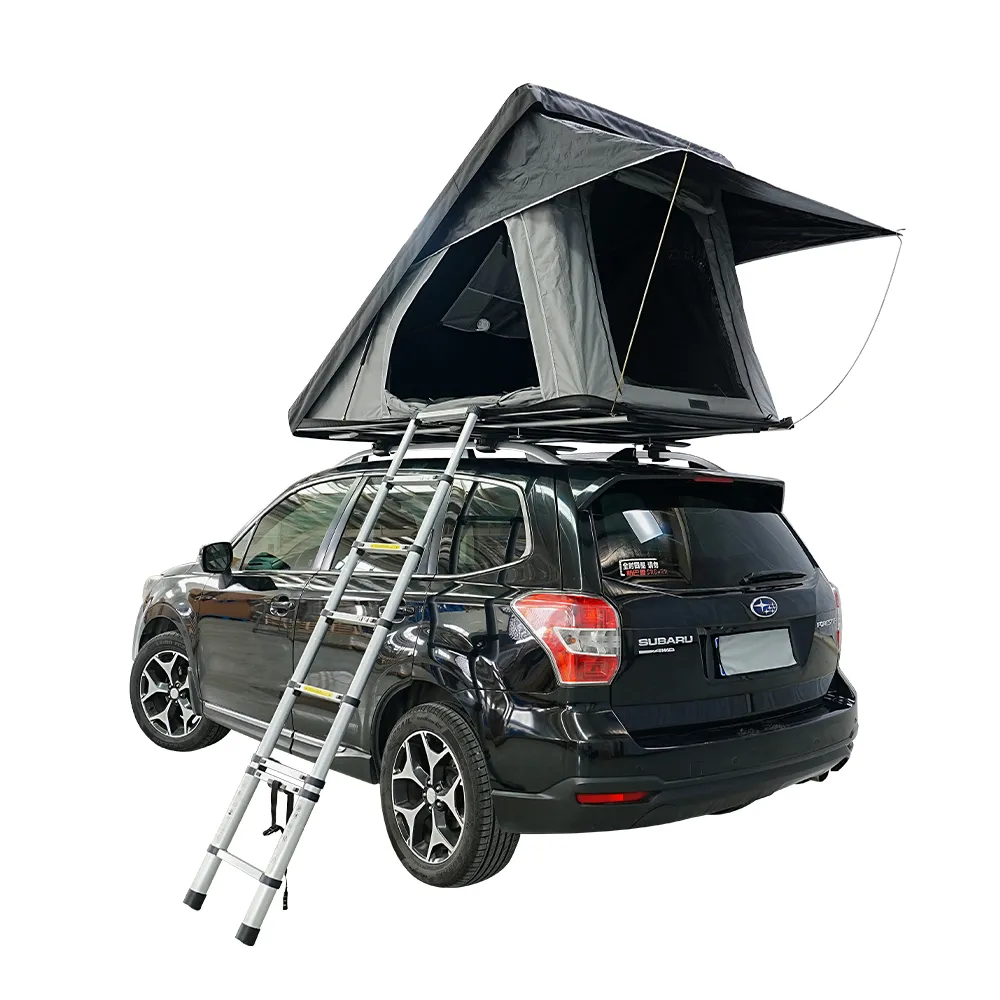
Waterproofing Performance for SUV Roof Tents
Hydrostatic Head Rating, Seam Sealing, and Real-World Rain Integrity
The core metric for a waterproof SUV roof tent is its hydrostatic head (HH) rating—the height of a water column the fabric can resist before leaking. A minimum of 3,000 mm meets the industry benchmark for reliable rain protection; premium rainflies achieve 4,500 mm or more to handle heavy, wind-driven downpours. But HH alone doesn’t guarantee dryness: seam integrity is equally critical. Heat-sealed, double-stitched seams with polyurethane (PU) coating block water intrusion through needle holes—the most common failure point in otherwise high-rated fabrics. A durable water repellent (DWR) finish further enhances performance by encouraging water to bead and roll off rather than soak in.
Real-world durability extends beyond lab metrics. Repeated folding, UV exposure, and mechanical stress degrade seam tapes and coatings over time—so a tent passing a 3,000 mm test may leak after one season if seam tape peels. Premium models address this with UV-resistant seam tapes and reinforced stitching. Soft-shell designs, with numerous fold lines, are especially prone to micro-fissures; hardshell tents avoid this with smooth, curved roofs that naturally channel water away and prevent pooling. Simulated storm tests—mimicking sustained, heavy rain—are therefore a more practical indicator of field performance than static HH numbers alone. Ultimately, true waterproofing integrates high hydrostatic head, robust seam sealing, and an aerodynamically efficient runoff shape to keep the interior bone-dry in demanding backcountry conditions.
UV and Thermal Resistance for Long-Term SUV Roof Tent Durability
UV-Stabilized Fabrics, Coating Lifespan (500+ hrs ASTM D4329), and Heat Reflectivity
UV radiation degrades tent materials by breaking molecular bonds—leading to brittleness, fading, and loss of tensile strength. For lasting durability on an SUV roof, manufacturers use UV-stabilized high-denier polyester or ripstop nylon treated with advanced inhibitors. The ASTM D4329 accelerated weathering standard—using fluorescent UV lamps to simulate prolonged sun exposure—is the authoritative benchmark. Coatings surviving 500+ hours under this test demonstrate strong resistance to photo-degradation, maintaining over 80% of original strength after several years of regular use—even under intense equatorial or high-altitude UV exposure. Hardshell models face similar challenges: UV-stabilized ABS shells require factory-applied protective finishes to prevent chalking and embrittlement, while aluminum offers inherent UV resistance but still benefits from thermal management.
Heat reflectivity is equally essential. Reflective outer coatings deflect solar radiation, lowering interior temperatures by 5–10°C. This reduces thermal expansion stress on seams and adhesives—slowing fatigue and preventing premature failure. Some models employ a dual-layer system: a reflective flysheet over a lighter inner canopy—maximizing heat rejection while minimizing solar heat gain. By combining proven UV stabilization with effective thermal reflectivity, these tents deliver cooler, longer-lasting performance in sun-intensive climates.
Wind Stability and Aerodynamic Integration with SUV Roof Racks
Dynamic Wind Tunnel Testing at 60+ mph and Mount-Specific Load Distribution
An SUV roof tent’s real-world wind stability hinges less on canopy shape and more on how its mounting system channels aerodynamic force into the vehicle structure. Dynamic wind tunnel testing at highway speeds (60+ mph) reveals that generic crossbar setups often generate lift and vibration, whereas mount-specific systems distribute loads evenly across the roof rails. Field data show proprietary mounting solutions withstand 34% higher wind forces before reaching unsafe deflection limits compared to standard crossbars (Outdoor Gear Lab, 2023). Similarly, side-mounted or clamp-on brackets tested at 50 km/h exhibit nearly 40% more lateral bend in storm simulations than roof-rack-anchored systems.
Mount type directly impacts stability, load distribution, and safe operating speed:
| Mount Type | Typical Wind-Tunnel Stability at 65 mph | Load Distribution Pattern | Recommended Speed Limit |
|---|---|---|---|
| Factory crossbars | Moderate flex and whistle | Two isolated points | 70 mph |
| Heavy-duty roof rails | Good, some buffeting | Spread along rail length | 80 mph |
| Proprietary low-profile mounts | Excellent, minimal drag | Full-roof contact | 85 mph |
This comparison confirms that aerodynamic integration is driven by mount design—not just tent form. When matched precisely to the SUV’s roof rack architecture, a dedicated mounting system ensures cabin quietness, minimizes fatigue-inducing vibration, and maintains secure anchorage—even during sudden crosswinds at interstate speeds.
SUV-Specific Sealing and Mount Interface Design
A weatherproof SUV roof tent depends as much on its mount interface as on canopy fabric. Bolts, brackets, and rails create direct pathways for water ingress if not engineered with precision sealing. Best-in-class designs draw from automotive body sealing standards—specifically ISO 20653:2023—which defines optimal interference fits (0.2–0.3 mm) and draft angles (30–45°) to balance compression force with long-term gasket resilience. These tolerances prevent gasket tearing while ensuring uniform contact pressure across the entire seal surface.
The base plate typically features a dual-lip EPDM or silicone gasket molded directly into the aluminum extrusion. A 45° chamfer at each bolt-through hole guides fasteners during installation and protects the primary seal lip from scuffing—a frequent cause of microscopic leaks. The inner lip delivers the main compression seal; the secondary labyrinth lip acts as a backup, capturing condensation or spray before it reaches the vehicle roof. Integrated drainage channels in the mounting rails divert runoff laterally—ensuring no moisture penetrates during high-pressure washes or 30-minute simulated downpours.
Dynamic flexing adds another layer of complexity: off-road vibrations and torsion transmit through the roof rack and can fatigue static seals. To counter this, mounting brackets often incorporate urethane bushings that absorb 15–20% of harmonic displacement—preserving seal integrity across 100,000 simulated road-load cycles (ASTM D4169-22). This combination of precision gasket geometry, active drainage, and flex-tolerant hardware achieves IPX6-level water-jet resistance—transforming the mount interface from a vulnerability into a long-term guarantee of dryness, whether facing monsoon rains, desert flash floods, or salt-laden coastal mist.
FAQ
What is a hydrostatic head rating, and why is it important?
A hydrostatic head rating indicates the water pressure a fabric can withstand before leaking. It’s critical for ensuring effective waterproofing in an SUV roof tent, with 3,000 mm being the industry benchmark for reliable rain protection.
How do seam-sealed tents differ in waterproof performance?
Seam-sealed tents block water intrusion at needle holes, the most common leakage point. Heat-sealed seams with polyurethane coatings enhance waterproof performance, ensuring better moisture protection compared to standard fabrics lacking such sealing.
How is UV resistance tested for roof tents?
UV resistance is tested using the ASTM D4329 standard, which simulates prolonged UV exposure with fluorescent lamps. Tents surviving 500+ hours of accelerated UV testing maintain durability even under intense sun conditions.
What role does wind tunnel testing play in roof tent design?
Wind tunnel testing evaluates how aerodynamic forces impact stability at highway speeds. Mount-specific systems offer superior load distribution, reducing vibration and lift compared to generic crossbars.
How are SUV roof tent sealing systems designed for long-term reliability?
Sealing systems use EPDM or silicone gaskets with precision geometry and active drainage channels to prevent water ingress. They also incorporate vibration-tolerant hardware to maintain gasket integrity under dynamic stresses.