 EN
EN

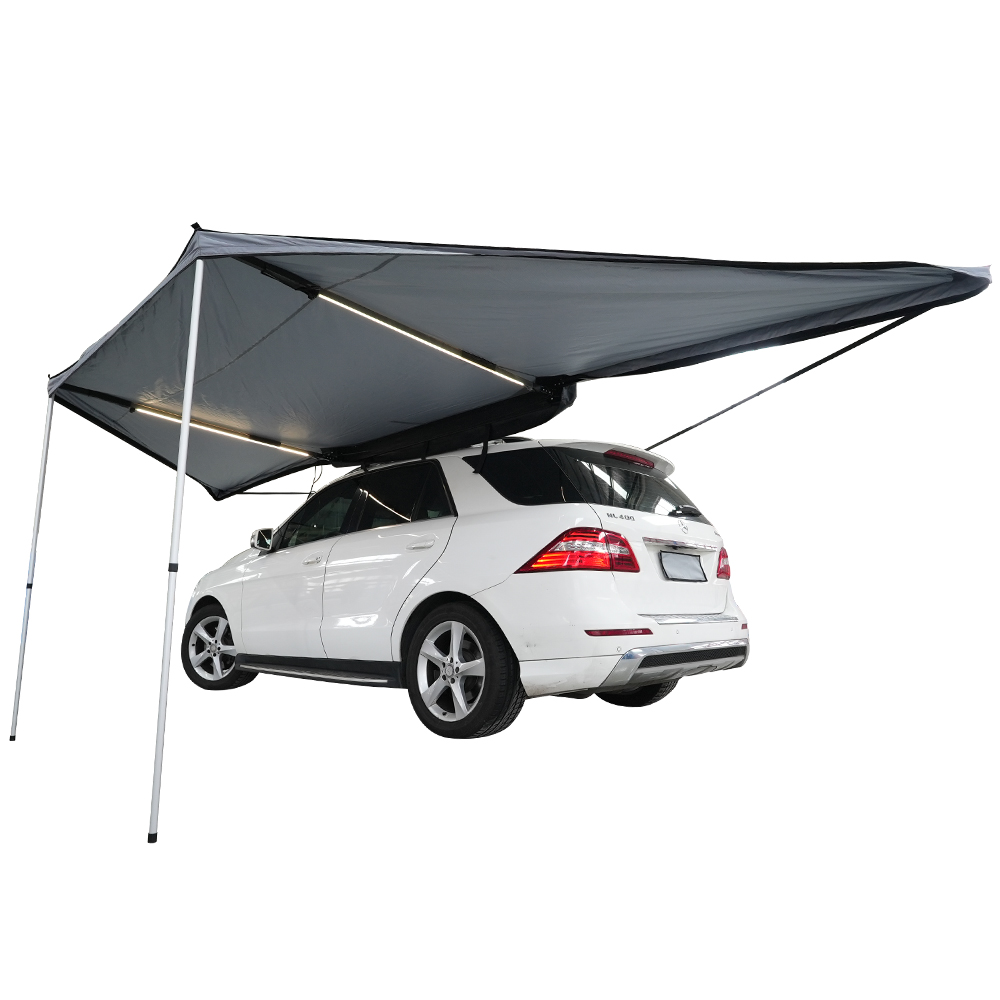
The Physics of Wind Load on Car Awnings
How the parachute effect compromises stability in gusty conditions
Wind behaves like a fluid, and every surface it hits experiences dynamic pressure. For a car awning, the large fabric canopy acts like a sail when wind flows underneath—creating a powerful uplift force known as the parachute effect. Bernoulli’s principle explains that faster-moving air above the fabric reduces pressure, while slower air trapped below generates higher pressure. This pressure differential produces violent lift, especially in gusty conditions where wind speed fluctuates rapidly. Because dynamic pressure increases with the square of wind speed, a 30 mph gust exerts roughly 2.3 psf—but sudden gusts can double the effective load. Over a 10×10‑foot awning, that translates to hundreds of pounds of uplift force. Without countermeasures, this can overcome even robust frames in seconds. Understanding this aerodynamic vulnerability is the first step toward designing awnings that resist wind effectively.
Real-world failure cases: Collapses, fabric tearing, and frame deformation at ≥30 mph
Field reports from coastal regions and open plains reveal a consistent threshold: once wind speeds reach 30 mph, car awning failures become frequent. Common outcomes include complete collapse under sudden uplift, fabric tearing along seams or at attachment points, and permanent bending of aluminum frame sections. At 30 mph, the dynamic load on a standard 8×8‑foot awning is approximately 140 pounds—but gust factors can push instantaneous loads beyond 300 pounds. Many consumer-grade models lack the anchoring depth or material strength to handle these forces. Lightweight poles buckle, tie-downs pull out of soft ground, and fabric rips near stitched corners. In one documented case, a 30‑mph gust rolled an entire awning structure into a vehicle, causing damage to both. These incidents underscore why wind resistance testing—not just static load ratings—must be a core requirement for any car awning intended for exposed environments.
Stabilization Systems That Enhance Car Awning Wind Resistance
Optimized anchoring: Tie-downs, guy lines, and support poles for dynamic load distribution
Proper anchoring transforms a standard car awning into a resilient shelter against unexpected gusts. Wind failures often occur at speeds as low as 30 mph when lateral forces overwhelm inadequate mounting points. Tie-downs secured to vehicle tow hooks or ground stakes counteract lift, while adjustable guy lines allow tension fine-tuning as wind direction shifts. Support poles act as load-bearing columns—positioned at critical stress points—to prevent frame deformation. This triangulated approach distributes forces dynamically across multiple anchors rather than concentrating stress on single failure points. For maximum stability, combine ratchet straps (with 1,500+ lb tensile strength) with angled reinforcement poles to handle sudden 50 mph gusts common in exposed campsites.
Material and Structural Engineering for Reliable Car Awning Wind Performance
Aluminum vs. steel frames: Strength-to-weight trade-offs under cyclic wind loads
Selecting the right frame material fundamentally impacts a car awning's ability to withstand gusty conditions. Aluminum alloys—particularly 6061-T6 aviation grade—offer a favorable strength-to-weight ratio, crucial for minimizing load transfer to vehicle mounting points during sustained winds. However, steel frames generally provide superior ultimate tensile strength—often exceeding 310 MPa—making them less prone to permanent deformation under extreme cyclic loading above 30 mph. This trade-off requires careful consideration: aluminum’s lighter weight enhances portability but may necessitate thicker wall sections or strategic reinforcement at joints to match steel’s resistance to bending moments in turbulent airflow. Field tests indicate aluminum frames typically maintain integrity up to 40 mph when properly engineered, while steel counterparts can withstand gusts exceeding 50 mph without compromising vehicle roof integrity.
Smart wind protection: Integrated sensors and auto-retract systems in premium car awnings
Advanced car awning models incorporate intelligent wind protection systems to mitigate failure risks proactively. These integrate micro-electromechanical systems (MEMS) accelerometers and anemometers that continuously monitor real-time wind speed and directional changes. When gusts exceed preset safety thresholds—often calibrated between 25–35 mph depending on the awning’s specific wind rating—the system triggers an automatic retraction mechanism. This technology prevents the dangerous “parachute effect” where wind captures the fabric canopy, significantly reducing incidents of frame deformation or anchor point failure. Premium systems feature progressive retraction speeds, allowing partial deployment in moderate breezes while safeguarding against sudden squalls, and include manual override capabilities for user control.
Understanding Wind Resistance Ratings for Car Awnings
Wind resistance ratings are critical metrics for assessing how well a car awning can withstand environmental stress. These ratings—typically expressed in miles per hour (mph) or pounds per square foot (psf)—quantify the force wind exerts on the structure. Higher numbers indicate greater resilience against gusts and storms. For car awnings, this translates directly to structural integrity: poorly rated units risk frame deformation, fabric tearing, or total collapse at wind speeds as low as 30 mph.
Three primary forces dictate wind load dynamics:
- Uplift pressure: Wind flowing beneath the awning creates upward force, potentially lifting it off its anchors.
- Lateral pressure: Side gusts push against panels and frames, testing joint durability.
- Shear pressure: Twisting forces strain connection points between components.
Manufacturers optimize designs to counter these forces through reinforced frames, aerodynamic profiles, and enhanced anchoring. Always verify that an awning’s rating exceeds your region’s average wind speeds—especially in hurricane-prone areas where 150+ mph ratings are advisable. Ignoring local codes risks structural failure and may void insurance coverage. Prioritize certified, wind-rated models to ensure longevity and safety.
