 EN
EN

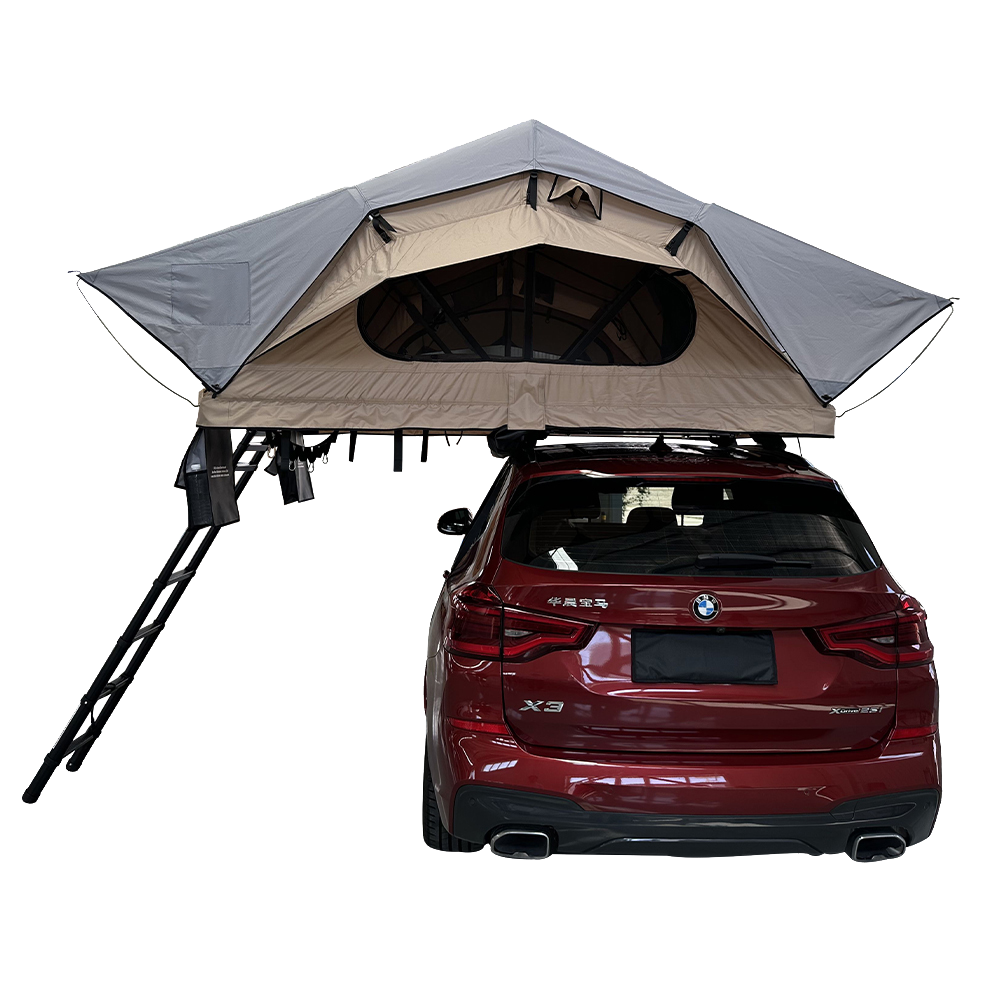
Accelerating Time-to-Market with Rooftop Tent OEM Expertise
How Tier-1 ISO-9001-Certified OEMs Cut Development Cycles by 40%
Partnering with a Tier-1 ISO 9001:2015–certified OEM dramatically shortens the journey from design to delivery. These manufacturers operate under rigorously audited quality management systems that eliminate redundant approval stages and reduce trial-and-error loops. By leveraging pre-validated material palettes, modular tooling, and concurrent engineering—where design, testing, and production prep happen in parallel—they compress prototyping from months to weeks. For outdoor brands targeting seasonal demand or responding to competitor launches, this acceleration is decisive: development timelines shrink by up to 40%, enabling new rooftop tent models to reach market in just 60–90 days instead of six months. The benefits extend beyond speed—fewer delays mean lower inventory holding costs, faster revenue realization, and reduced risk of costly late-stage design changes.
From Concept to Shelf: The End-to-End Rooftop Tent OEM Workflow
The typical OEM workflow begins with a collaborative design review, where engineers align on specifications, use cases, and target price point. CAD models are developed and refined through rapid feedback loops before freezing the design. A physical prototype follows—subjected to fit, function, and durability validation—while long-lead materials (e.g., aerospace-grade aluminum frames, PU-coated ripstop fabrics, YKK zippers) are procured and production lines are set up. Manufacturing includes precision laser cutting, TIG welding, industrial sewing, multi-stage assembly, and comprehensive inspection at critical control points. Final steps involve folding, accessory integration, branded packaging, and logistics-ready shipment. This vertically integrated process eliminates supplier fragmentation, ensuring consistent quality, simplified logistics, and predictable time-to-shelf.
Driving Innovation and Customization Through Rooftop Tent Co-Development
Collaborating with an experienced OEM transforms a brand’s product vision into a tangible, market-ready rooftop tent. Through structured co-development, brands gain early access to specialized R&D capabilities grounded in real-world overlanding challenges—not theoretical benchmarks.
Joint R&D for Weather-Resistant, Lightweight Rooftop Tent Designs
Brands and OEMs jointly engineer tents that balance extreme-weather resilience with packability. By sharing field failure data—such as seam blowouts in high-wind conditions or condensation buildup during alpine nights—teams iteratively refine fabric coatings, frame triangulation, and seam-sealing methods. This evidence-based collaboration yields structures that are simultaneously lighter and more durable than generic alternatives. Iterative prototyping ensures final performance meets precise targets for wind resistance (tested to ≥60 mph), hydrostatic head (≥3,000 mm), and thermal retention—critical for weight-conscious overlanders who prioritize reliability without compromise.
Material Sourcing & Feature Integration: Tailoring Rooftop Tents to Brand Identity
Customization extends across material science and functional detail. OEMs provide vetted options—including 420D vs. 600D ripstop nylon, silicone vs. polyurethane coatings, and 6061-T6 vs. 7075-T6 aluminum alloys—enabling brands to calibrate strength, weight, and cost. Beyond substrates, feature-level personalization includes custom zipper pulls, color-matched thread, modular rail systems for awnings or solar mounts, and reinforced anchor points for dynamic loads. These decisions directly reflect brand positioning: a value-oriented line may emphasize rugged simplicity and serviceability, while a premium expedition model prioritizes weight savings, low-temperature flexibility, and seamless accessory integration.
Ensuring Quality, Compliance, and Scalability in Rooftop Tent Production
A professional rooftop tent OEM embeds quality assurance at every stage—from incoming raw material inspection to post-production environmental stress testing. Factories certified to ISO 9001:2015 implement documented control plans, statistical process monitoring, and nonconformance tracking. Compliance with CE (EN 13814:2019 for temporary structures) and RoHS directives is standard practice—not optional—for brands entering EU or North American markets, verifying mechanical safety, flame retardancy, and restricted substance control. Scalability is built into the system: standardized work instructions, calibrated tooling, and cross-trained teams allow batch sizes to scale from pilot runs (100 units) to full production (10,000+ units) without variance in dimensional accuracy, seam integrity, or finish quality. This consistency reduces warranty claims by up to 35% and strengthens trust across distribution channels and end users.
Strengthening Brand Equity via Rooftop Tent Co-Manufacturing Control
Logo Integration, Packaging, and Accessory Bundling for Premium Positioning
Co-manufacturing control empowers brands to express identity at every touchpoint. Precision embroidery on canopy corners, custom-dyed webbing, and laser-engraved aluminum hardware reinforce craftsmanship before the first setup. Protective packaging—like branded carry bags with internal foam cradles or recyclable molded pulp inserts—turns unboxing into a deliberate brand experience. Strategic accessory bundling (e.g., integrated LED lighting kits, weather-rated awning rooms, or vehicle-specific mounting brackets) positions the tent not as a standalone item but as the centerpiece of a cohesive adventure ecosystem. OEMs support flexible color palettes, Pantone-matched components, and scalable print processes—all aligned to the brand’s visual language. Research from McKinsey’s 2023 Outdoor Goods Report confirms that thoughtfully branded packaging and curated bundles increase perceived value by up to 20% and lift repeat purchase rates by 14%.
IP Ownership and Design Autonomy in Rooftop Tent OEM Agreements
A strategic OEM partnership starts with unambiguous intellectual property terms. Brands that retain full ownership of CAD files, BOMs, mold designs, and test documentation preserve complete design autonomy—enabling iterative improvements (e.g., hinge mechanism refinements or fabric thickness adjustments) without legal renegotiation. Leading OEMs formalize this with signed NDAs and IP assignment clauses, ensuring proprietary innovations—like proprietary rainfly tensioning systems or patented shock-cord routing—remain exclusive assets. This control safeguards long-term brand equity: it prevents unauthorized replication, supports seamless accessory interoperability across generations, and allows future manufacturing flexibility—whether scaling with demand or pivoting to new partners—without forfeiting hard-won differentiation.
