EN

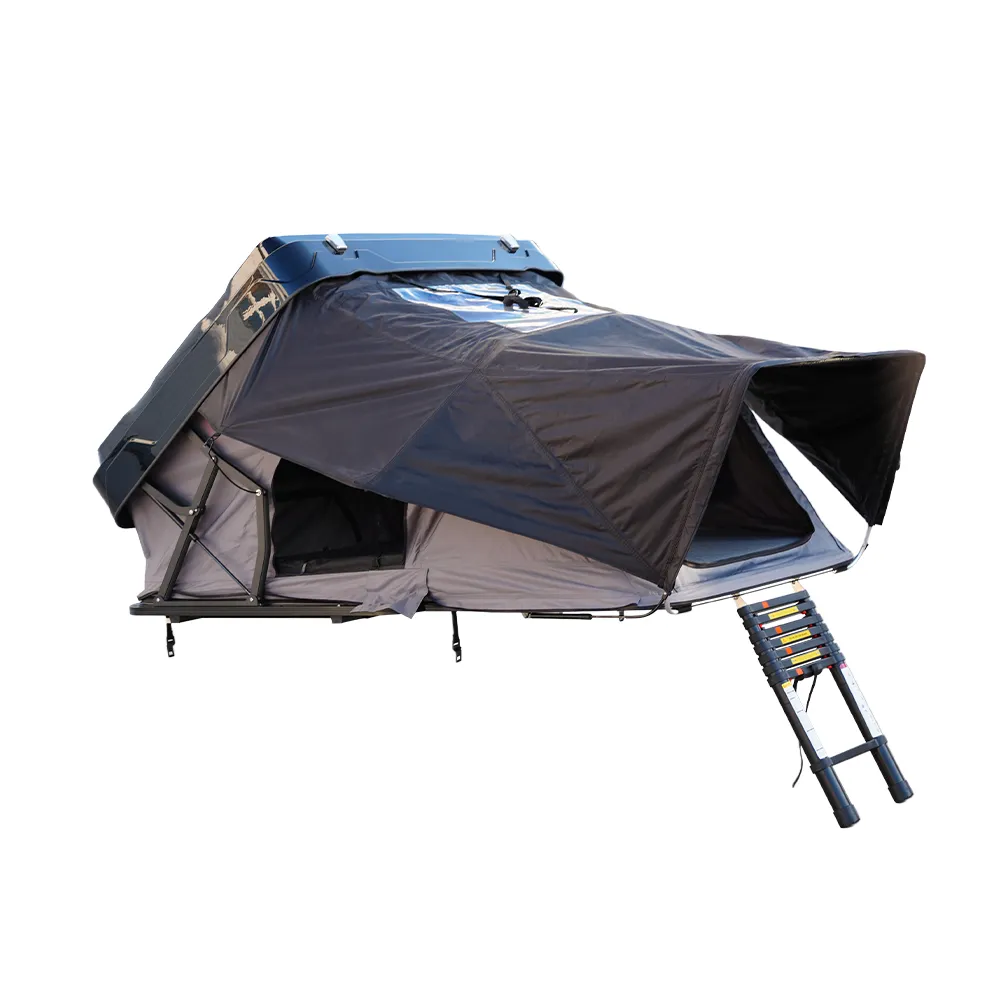
Engineered Durability for Extreme Off-Road Environments
Ensuring a vehicle roof tent can withstand the rigors of off-road travel demands careful material engineering and design. Two critical aspects—material resilience and structural form—determine long-term reliability in harsh conditions.
UV-Stabilized Fabrics and Anodized Aluminum Frames for Long-Term Exposure
Premium tents use ripstop polyester or nylon blended with UV absorbers and coated with polyurethane to resist solar degradation. In accelerated UV weathering tests (ASTM G154), these fabrics retained 95 % of their original tear strength after 2,000 hours of simulated sunlight—equivalent to over five years of desert exposure. Frames built from 6000-series aluminum receive Type II hard anodizing, creating a 25-micron oxide layer that prevents corrosion. Salt-spray testing per ASTM B117 shows zero pitting after 3,000 hours—even in coastal or winter-salt environments. Together, UV-stabilized shells and anodized frames reduce maintenance costs by roughly 35 % over a decade, while routine rinsing after dusty or saline trips preserves the finish.
Hard Shell vs Soft Shell Vehicle Roof Tent: Performance in Abrasive, Dusty, and High-Vibration Conditions
A hard shell tent uses an ABS or fiberglass dome that naturally sheds branches and road gravel; lab impact tests show it absorbs 40 % more kinetic energy without cracking than lightweight fabric. Sealed gaskets give hard shells superior dust-blocking—a trial across Australia’s Red Centre measured just 0.2 g of dust intrusion per hour versus 1.5 g for a standard soft shell. Soft shell tents, however, remain highly capable when built with silicone-coated ripstop and reinforced corner patches. Under MIL-STD-810G vibration profiles, such patches reduced fabric fatigue by 60 % compared to untreated edges. For high-vibration terrain, soft shells require tension straps to prevent flapping, while hard shells lock rigidly via over-center latches. Ultimately, hard shells excel on abrasive, dust-heavy routes; soft shells deliver strong performance when paired with consistent cleaning and strap adjustments.
Seamless Integration with 4x4 and Off-Road Vehicles
A vehicle roof tent must do more than simply sit atop a rack; it needs to remain securely fixed when the trail turns brutal, absorbing multidirectional shocks without loosening or damaging the roof structure.
Roof Rack Compatibility and Dynamic Mounting Stability Across Uneven Terrain
Not every roof rack can withstand the relentless vibrations and lateral forces of off-road driving. A robust platform or heavy-duty crossbar system—rated for the tent’s static and dynamic mass—is essential. When a vehicle pounds over washboard corrugations, peak vertical accelerations often exceed 3g (SAE International), meaning a 100 kg roof tent can momentarily generate 300 kg of downward or upward pull. This demands mounts that resist cyclic fatigue—such as through-bolted clamps paired with locking plates or high-tenacity straps that maintain consistent tension. Aluminum T-slot extrusions are popular for their corrosion resistance and weight savings, though steel racks offer higher stiffness for extreme flex. Anti-vibration hardware—including serrated washers, Nyloc nuts, and dual-stage latching systems—prevents fastener creep. Regular torque checks remain critical; a single loose bolt on a remote track can cascade into tent detachment. Choosing a rack with a dedicated mounting kit for the specific tent model further reduces stress-concentration points that may crack under repeated dynamic cycling.
Respecting Vehicle Roof Load Limits Under Real-World Off-Road Stress
Manufacturers quote two roof load figures: a high static limit for parked conditions and a much lower dynamic limit for driving. While a static rating may be 250–300 kg, the dynamic limit—the maximum allowed while the vehicle is in motion—is often just 60–100 kg (ISO 11154-4). Off-road, that dynamic ceiling drops further because suspension articulation and corrugations multiply forces. A vehicle roof tent plus mounting hardware and bedding can easily consume 70–85 kg, leaving little room for extra gear without violating the limit. Exceeding the dynamic rating doesn’t just void warranties—it elevates the center of gravity, degrades cornering stability, and can cause the roof sheet metal to oil-can or fatigue-crack. On steep, off-camber trails, an overloaded roof also increases rollover risk. So before installation, weigh the tent and all permanent attachments, then consult the vehicle’s dynamic roof load specification. Staying within that boundary keeps both the tent and the journey safe.
All-Season, Off-Grid Readiness of the Vehicle Roof Tent
Integrated Weather Sealing, Condensation-Managed Ventilation, and Rapid Drainage Systems
A vehicle roof tent engineered for year-round expeditions combines robust weather sealing with smart climate control. Laminated ripstop fabrics, double-stitched and tape-sealed seams, plus storm flaps over heavy-duty zippers block driving rain and windblown dust, maintaining a dry interior continuously. Hidden mesh panels and low-profile air intakes manage condensation without sacrificing thermal retention, reducing interior moisture buildup by up to 40 % compared to poorly ventilated designs. Angled floor panels and integrated drain channels shed rainfall instantly, preventing pooling even in sustained downpours. These integrated systems ensure habitability in alpine chill, desert sun, or monsoon dampness—empowering off-grid travelers to stop anywhere, anytime.
Proven Reliability and Rapid Deployment in Remote Locations
When overlanding far from civilization, the reliability of a vehicle roof tent becomes non-negotiable. Unlike ground tents that demand clearing debris and driving stakes, a rooftop system can often be fully deployed in under five minutes—critical speed when weather closes in or daylight fades. Modern designs borrow from expedition-grade rapid-deployment systems, featuring reinforced frame hubs and permanently attached poles that lock into place, eliminating fumbling with loose components. A truss-style aluminum frame, for instance, routinely withstands more than 300 pounds of hanging load without deforming—keeping the shelter rock-steady under sudden snow or buffeting winds. This structural integrity translates directly into safer nights in exposed terrain. Field reports from remote mining and oilfield teams show that swapping a conventional ground tent for a rooftop system slashes setup time from over 30 minutes to well under 10 minutes, letting crews refocus on the mission faster. Combined with vibration-resistant mounts designed to absorb thousands of miles of corrugated tracks, the deployment mechanism proves itself trip after trip—making the vehicle roof tent a trusted asset for off-grid expeditions where failure is not an option.
FAQ Section
What materials are used to ensure durability in vehicle roof tents?
Premium vehicle roof tents utilize ripstop polyester or nylon combined with UV stabilizers and anodized aluminum frames to withstand off-road conditions. These materials are engineered to resist solar degradation and corrosion.
What is the difference between hard shell and soft shell tents?
Hard shell tents offer better protection against dust, branches, and gravel, and are more rigid in high-vibration environments. Soft shell tents, when fortified with reinforced corners and silicone coatings, perform well if maintained and paired with tension straps.
How do roof tents integrate with off-road vehicles?
Roof tents require robust roof racks and mounts that absorb multi-directional shocks. Dynamic mounting stability ensures tents remain securely attached even in rough terrain.
What are the roof load limits I should consider?
Static roof load limits are higher, but dynamic limits are critical when driving. Off-road conditions further reduce dynamic limits due to increased vibrations and forces.
How do vehicle roof tents manage harsh weather conditions?
These tents feature weather-sealed fabrics, moisture ventilation systems, and rapid drainage systems to handle diverse climates, including rain, snow, and extreme heat.